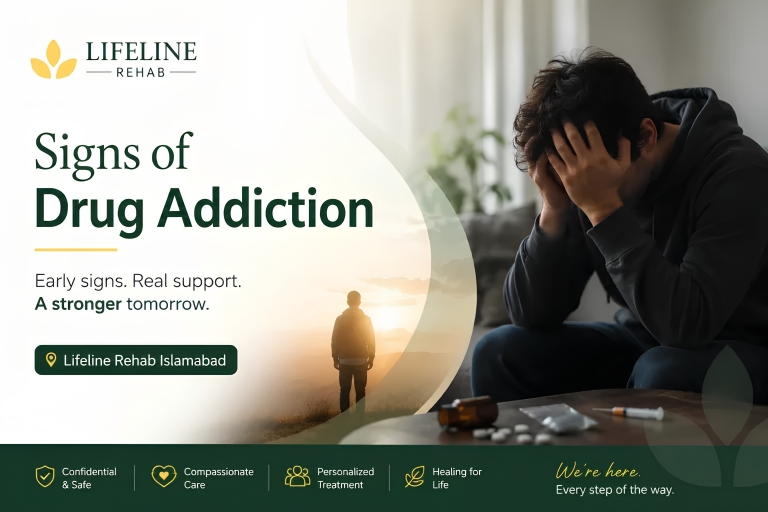
Signs of Drug Addiction:
How to Know if Someone Needs Help Drug addiction can affect anyone regardless of age, background, or lifestyle. Many people struggle to recognize the early warning signs until the problem becomes severe. Identifying these signs early can make a significant difference in helping someone receive timely support and recovery.
If you are concerned about a loved one, understanding the signs of drug addiction can help you take the right steps toward professional addiction treatment. This guide explains the physical, emotional, behavioral, and social indicators of substance abuse and when it may be time to seek help from Lifeline Rehab, a trusted rehab center in Islamabad.
What Is Drug Addiction?
Drug addiction affects the brain and behavior, making it hard to control substance use despite harmful effects. It can involve cocaine, heroin, cannabis, prescription drugs, and other substances.
Why Recognizing the Signs of Drug Addiction Matters
Many people hide substance use, making addiction hard to recognize. Spotting the signs early can prevent health risks, reduce overdose chances, improve recovery, and protect family relationships. Early intervention can make a significant difference in helping someone get the support and treatment they need.
Sign Of Drug Addiction
Physical Signs
- Sudden weight changes
- Changes in sleep patterns
- dilated pupils
- Poor personal hygiene
- Frequent illnesses
Emotional Signs
- Mood swings
- Anxiety and depression
- Paranoia
- Lack of motivation
- Emotional withdrawal
Behavioral Signs
- Increased secrecy
- Financial problems
- Neglecting responsibilities
- Risky behavior
- Changes in daily routine
Social Signs
- New social circles
- Relationship problems
- Loss of interest in activities
Signs of Cocaine Addiction
Cocaine is a highly addictive stimulant that can have serious physical and psychological effects. Recognizing the signs of cocaine addiction is essential for early intervention.
Physical Signs of Cocaine Addiction
Common physical symptoms include:
- Dilated pupils
- Frequent nosebleeds
- Increased energy levels
- Rapid heartbeat
- Reduced appetite
- Sudden weight loss
Behavioral Signs of Cocaine Addiction
Individuals using cocaine may display:
- Extreme confidence
- Impulsive decision-making
- Restlessness
- Aggressive behavior
- Risk-taking tendencies
Emotional Signs of Cocaine Addiction
Long-term cocaine use can contribute to:
- Anxiety
- Depression
- Irritability
- Mood instability
- Paranoia
When Does Someone Need Professional Help?
Occasional substance use can quickly develop into a serious addiction. Professional help should be considered if someone:
- Cannot stop using drugs despite repeated attempts
- Experiences withdrawal symptoms
- Has health problems related to substance use
- Shows significant personality changes
- Neglects work, education, or family responsibilities
- Faces legal or financial issues due to drug use
- Experiences depression, anxiety, or other mental health concerns
Seeking help early often leads to better recovery outcomes.
How Lifeline Rehab Helps with Addiction Treatment and Mental Health Treatment
At Lifeline Rehab, we understand that addiction affects every aspect of a person’s life. Our comprehensive addiction treatment programs focus on both substance recovery and mental health treatment to support long-term healing.
Personalized Assessment
Every individual receives a detailed evaluation to identify their unique treatment needs.
Medical and Psychological Support
Our team provides professional care for individuals dealing with:
- Drug addiction
- Cocaine addiction
- Alcohol dependency
- Co-occurring mental health conditions
Individual Counseling
One-on-one therapy sessions help patients understand the underlying causes of addiction and develop healthy coping strategies.
Family Support Programs
Addiction impacts families as well. We provide education and guidance to help families support recovery effectively.
Relapse Prevention
Long-term success requires ongoing support. Our relapse prevention programs help individuals maintain recovery and build healthier lifestyles.
As a trusted rehab center in Islamabad, Lifeline Rehab is committed to helping individuals regain control of their lives through compassionate and evidence-based care.
Why Choose Lifeline Rehab?
Families looking for the best rehabilitation center in Islamabad need a facility that offers comprehensive care and professional expertise.
Lifeline Rehab provides:
- Experienced addiction specialists
- Personalized treatment plans
- Mental health treatment services
- Confidential care
- Family-focused recovery programs
- Long-term recovery support
Our goal is to help every patient achieve lasting recovery and improved well-being.
Frequently Asked Questions
What are the first signs of drug addiction?
Early signs may include mood swings, secrecy, changes in sleep patterns, declining performance at work or school, and withdrawal from family and friends.
How can I tell if someone is addicted to cocaine?
Common signs of cocaine addiction include increased energy, dilated pupils, nosebleeds, rapid speech, mood swings, and risky behavior.
Can addiction affect mental health?
Yes. Drug addiction often contributes to anxiety, depression, paranoia, and other mental health conditions, making integrated mental health treatment essential.
When should I seek professional addiction treatment?
Professional help is recommended when substance use begins affecting health, relationships, work performance, finances, or daily responsibilities.
Is recovery from drug addiction possible?
Yes. With proper addiction treatment, counseling, support, and ongoing care, many individuals achieve long-term recovery and healthier lives.