
When discussing stimulant drugs, one of the most common questions people ask is: Methamphetamine vs Methylphenidate
“what is the difference?”While both substances affect the central nervous system and influence dopamine levels in the brain, they are used for very different purposes and carry significantly different risks.
Methamphetamine, commonly known as meth or crystal meth, is a highly addictive stimulant often associated with substance abuse and serious health consequences. Methylphenidate, on the other hand, is a prescription medication used to treat Attention Deficit Hyperactivity Disorder (ADHD) and narcolepsy. Although both drugs impact attention, focus, and energy levels, their effects, safety profiles, and addiction risks vary considerably.
Understanding the differences between methamphetamine and methylphenidate is important for patients, families, and healthcare professionals. This guide explains how each drug works, their risks, signs of addiction, withdrawal symptoms, and available treatment options.
What Is Methamphetamine?
Methamphetamine is a powerful stimulant that affects the brain and body by increasing dopamine activity. Dopamine is a neurotransmitter responsible for feelings of pleasure, reward, motivation, and focus.
Often sold illegally as crystal meth, ice, speed, or crank, methamphetamine produces an intense feeling of euphoria and increased energy. However, these effects are short-lived, leading many users to take repeated doses. This cycle can quickly result in dependence and addiction.
Common Names
- Crystal Meth
- Ice
- Speed
- Crank
- Glass
Effects of Methamphetamine
- Increased alertness
- Reduced appetite
- Increased heart rate
- Aggression
- Anxiety
What is Methylphenidate?
Methylphenidate is a prescription stimulant commonly used to treat ADHD and narcolepsy. It is widely recognized under brand names such as Ritalin and Concerta.
Unlike methamphetamine, methylphenidate is designed to improve focus, attention, and impulse control when taken under medical supervision.
How Methylphenidate Works
Methylphenidate increases dopamine and norepinephrine levels in a controlled manner. This helps individuals with ADHD stay focused and manage daily tasks more effectively without producing the intense euphoric effects associated with methamphetamine.
Medical Uses
Methylphenidate is prescribed for:
- ADHD
- Narcolepsy
- Attention difficulties
- Impulse control issues
When used as directed by a healthcare provider, methylphenidate is considered safe and effective.
Key Differences Between Methamphetamine vs Methylphenidate
Although both drugs are stimulants, they differ significantly in legality, medical use, addiction risk, and health effects.
| Factor | Methamphetamine | Methylphenidate |
|---|---|---|
| Purpose | Often abused as a street drug | Prescribed for ADHD and narcolepsy |
| Addiction Risk | Extremely high | Lower when used correctly |
| Dopamine Effect | Rapid, intense dopamine surge | Controlled dopamine increase |
| Medical Supervision | Usually absent in misuse | Prescribed and monitored |
| Long-Term Impact | Severe physical and mental harm | Generally safe when prescribed |
| Common Use | Recreational abuse | Medical treatment |
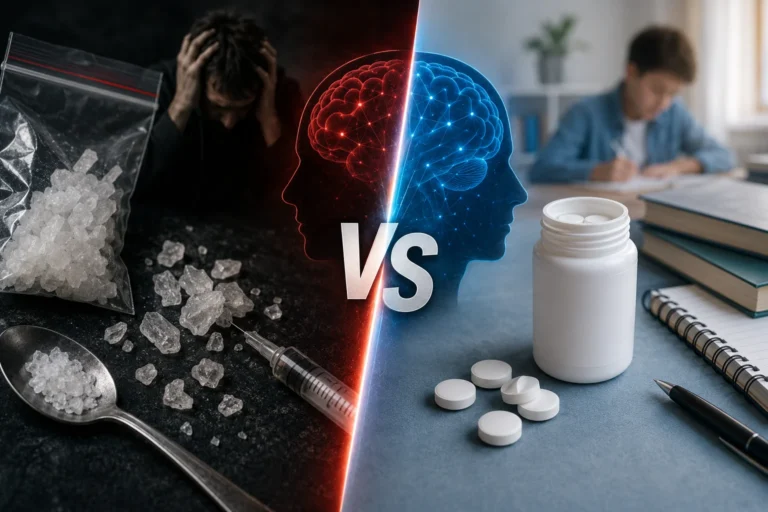
Addiction Potential: Which Drug Is More Addictive?
One of the biggest distinctions in the Methamphetamine vs Methylphenidate comparison is addiction potential.
Methamphetamine is highly addictive because it floods the brain with dopamine, creating intense feelings of pleasure. Over time, users need increasing amounts of the drug to achieve the same effect.
Methylphenidate can also be misused, but when taken as prescribed, its addiction risk is significantly lower. Problems typically arise when individuals:
- Take higher doses than prescribed
- Use it without a prescription
- Crush or snort tablets
- Combine it with other substances
Despite these risks, methylphenidate does not generally produce the severe addiction patterns commonly seen with methamphetamine.
Effects on the Brain
Methamphetamine
Methamphetamine causes a rapid release of dopamine, overwhelming the brain’s reward system and disrupting normal brain function. With repeated use, it can lead to serious mental and cognitive effects, including memory problems, emotional instability, poor judgment, increased aggression, making it difficult for individuals to think & manage their emotions.
Methylphenidate
Methylphenidate increases dopamine gradually, helping improve concentration and attention without causing the extreme highs associated with methamphetamine.
This controlled mechanism is why methylphenidate is used medically while methamphetamine abuse often leads to addiction.
Health Risks of Methamphetamine
Physical Health Risks
- Severe weight loss
- High blood pressure
- Heart problems
- Stroke
- Sleep deprivation
- Dental decay (“Meth Mouth”)
Mental Health Risks
- Depression
- Anxiety
- Paranoia
- Hallucinations
- Violent behavior
- Suicidal thoughts
Can Methylphenidate Be Dangerous?
When prescribed appropriately, methylphenidate is generally safe. However, misuse can increase the risk of side effects and dependency.
Possible side effects include:
- Insomnia
- Increased heart rate
- Anxiety
- Appetite suppression
- High blood pressure
- Irritability
Individuals should always follow medical advice when using methylphenidate.
Signs of Methamphetamine Addiction
- Intense cravings
- Staying awake for long periods
- Rapid weight loss
- Mood swings
- Aggressive behavior
- Financial problems
- Poor hygiene
- Social isolation
- Anxiety and paranoia
- Repeated failed attempts to quit
Methamphetamine Detox and Recovery
Detoxification is often the first step in overcoming methamphetamine addiction.
A professional detox program may include:
- Medical monitoring
- Symptom management
- Hydration support
- Nutritional care
- Mental health assessment
- Emotional support
Detox alone is not enough. Long-term recovery requires therapy, counseling, relapse prevention strategies, and ongoing support.
How Lifeline Rehab Islamabad Can Help
Methamphetamine addiction can affect physical health, mental wellbeing, family relationships, and overall quality of life. At Lifeline Rehab Islamabad, patients receive comprehensive care tailored to their individual needs.
Medical Detox
Professional supervision helps manage withdrawal symptoms safely and comfortably.
Individual Counseling
Patients work with trained professionals to identify triggers and develop healthier coping strategies.
Group Therapy
Peer support plays an important role in long-term recovery and relapse prevention.
Mental Health Treatment
Anxiety and depression treatment improves addiction recovery.
Family Support Programs
Family involvement can strengthen relationships and create a healthier recovery environment.
Relapse Prevention
Patients learn practical strategies to manage cravings and maintain sobriety after treatment.
Why Choose Lifeline Rehab?
Choosing the right addiction treatment center is a critical decision.
Lifeline Rehab is recognized for:
- Personalized treatment plans
- Professional addiction treatment services
- Confidential environment
- Experienced healthcare professionals
- Mental health treatment support
- Family-focused care
- Long-term recovery planning
As a trusted rehab center in Islamabad, Lifeline Rehab focuses on helping individuals rebuild their lives through evidence-based treatment and compassionate support.
The comparison of Methamphetamine vs Methylphenidate highlights important differences in medical use, addiction risk, and long-term health effects. While methylphenidate can be a valuable treatment for ADHD when used correctly, methamphetamine remains a highly addictive substance that can cause severe physical and mental harm.
Anyone struggling with methamphetamine addiction should seek professional support as early as possible. Recovery is achievable with the right treatment, guidance, and commitment.
If you or a loved one is struggling with methamphetamine addiction, professional help is available.
Contact Lifeline Rehab Islamabad today to learn more about detox, addiction treatment, counseling, mental health support, and long-term recovery programs. Take the first step toward a healthier, drug-free future.

Mr. Fazal Wahid is a highly experienced Clinical Psychologist and esteemed Addiction Specialist, currently serving as the CEO/Founder of Lifeline. His academic journey includes a master’s degree in Psychology, followed by an MS in Addiction Sciences from the renowned King’s College London